
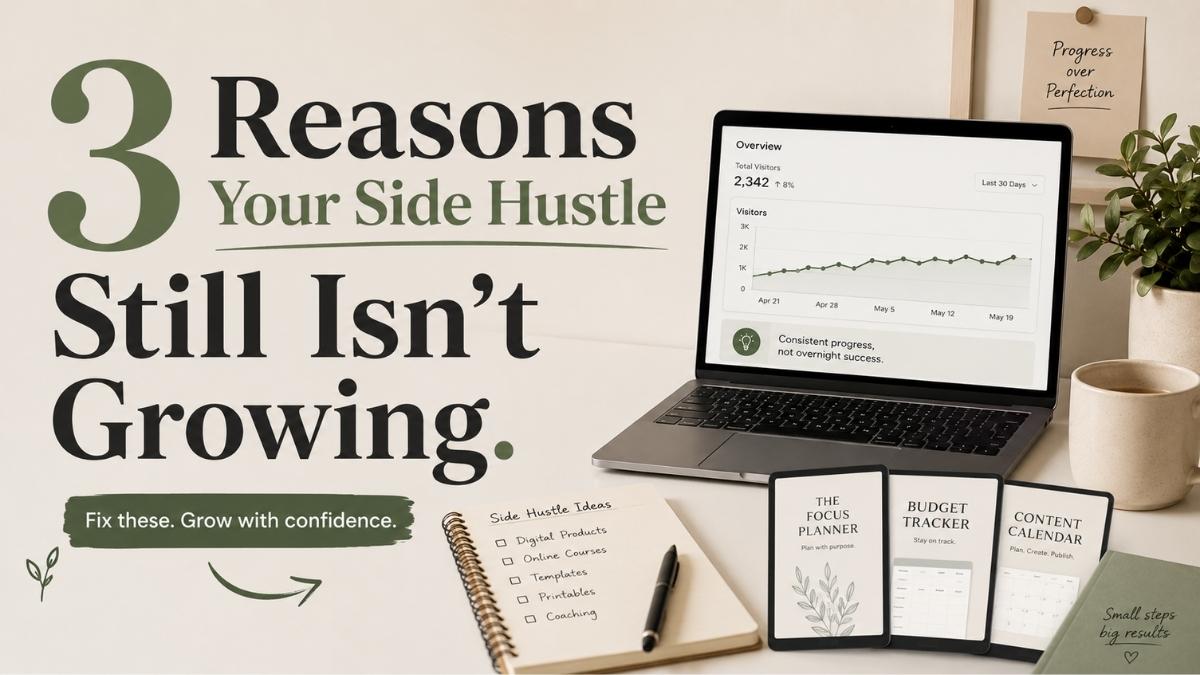
Most people do not quit their side hustle because they are lazy. They quit because it feels like nothing is happening.
You post the pins, write the blog posts, create the product, watch a few videos, try a few strategies, and change your plan again. But somehow, everything still feels stuck. That is the frustrating part. You are busy, but the side hustle is not really growing.
I have felt this myself. One week, I was convinced blogging was the answer. The next week, Etsy’s digital products looked like the smarter move. Then, Pinterest traffic became the focus. Then, affiliate marketing started sounding like the better path.
The problem was not that any of those ideas were bad. The problem was that I kept moving before anything had enough time to work.
And that is where a lot of beginners get trapped. A side hustle does not grow just because you start it. It grows when you build a system around it.
Here are three reasons your side hustle still is not growing.

1. You Keep Chasing New Ideas Instead of Building One System
This is probably the most common mistake. You start with one idea, then immediately see someone else making money with another one. So you switch.
You try Etsy for two weeks. Then you try blogging. Then you try YouTube. Then you try printables. Then you start researching affiliate marketing. Every new idea feels like the missing piece, but most of the time, it is just another distraction.
The truth is that most side hustles look boring before they start working. A blog needs articles before it gets traffic. An Etsy shop needs products, listings, keywords, and trust. Pinterest needs consistent pins before it understands your content. Digital products need both creation and promotion.
Even U.S. Bank’s passive income guide explains that passive income often still requires upfront effort or ongoing oversight before it becomes steady.
That is the part people skip. They want the income stage without surviving the building stage.
If your side hustle is not growing, ask yourself this: Have I actually committed to one path long enough to give it a fair chance?
Because if the answer is no, the problem may not be the business model. It may be the constant restarting.
2. You Are Doing Tasks, But Not Building Assets
This is a big mindset shift. Not every task helps your side hustle grow long-term.
Scrolling for ideas is not an asset. Watching another tutorial is not an asset. Redesigning your logo five times is not an asset. Those things may feel productive in the moment, but they do not always create something that can keep working for you later.
An asset is something that can keep working after you create it. A blog post can become an asset. A Pinterest pin can become an asset. An email list is an asset. A digital product is an asset.
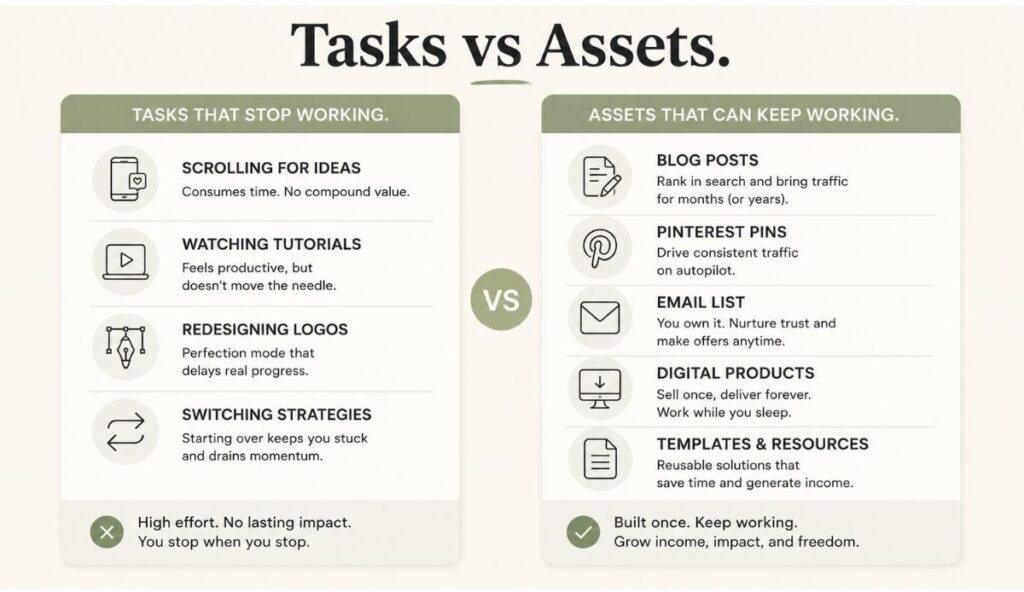
A budget tracker, tax tracker, printable planner, or spreadsheet template can become an asset if people can find it and buy it repeatedly.
That is why I think digital products are so powerful for beginners. Etsy explains that digital downloads can be listed as instant downloads, which means customers receive the file automatically after purchase through the platform’s digital delivery system. You can read Etsy’s own guide here: How to Sell Digital Downloads on Etsy.
That does not mean digital products are effortless. You still need good design, useful products, strong titles, keyword research, product photos, and traffic. But once the product exists, it has the potential to keep selling without being recreated every single time.
That is very different from trading hours for dollars forever.
This is also why I am focusing more on content, Pinterest, and digital products now. They connect together. A blog post can educate. A Pinterest pin can bring traffic. A digital product can solve the reader’s problem.
That is a system.
If you have already read my article on why most people fail at passive income, this is the next layer. Passive income becomes more realistic when you stop chasing random tasks and start building things that can compound.
And if you are just starting from a small budget, you can also read my guide on passive income ideas under $100 to see beginner-friendly ways to start building your first income stream.
3. You Quit Before Momentum Has Time to Show Up
This one hurts because it is so easy to do. Most side hustles do not fail loudly. They fail quietly.
You publish a few posts, and nothing happens. You upload a few Etsy listings, and nobody buys. You create pins and only get a few impressions. Then you start thinking the idea does not work, the niche is wrong, or maybe you should try something else.
But early growth is usually invisible.
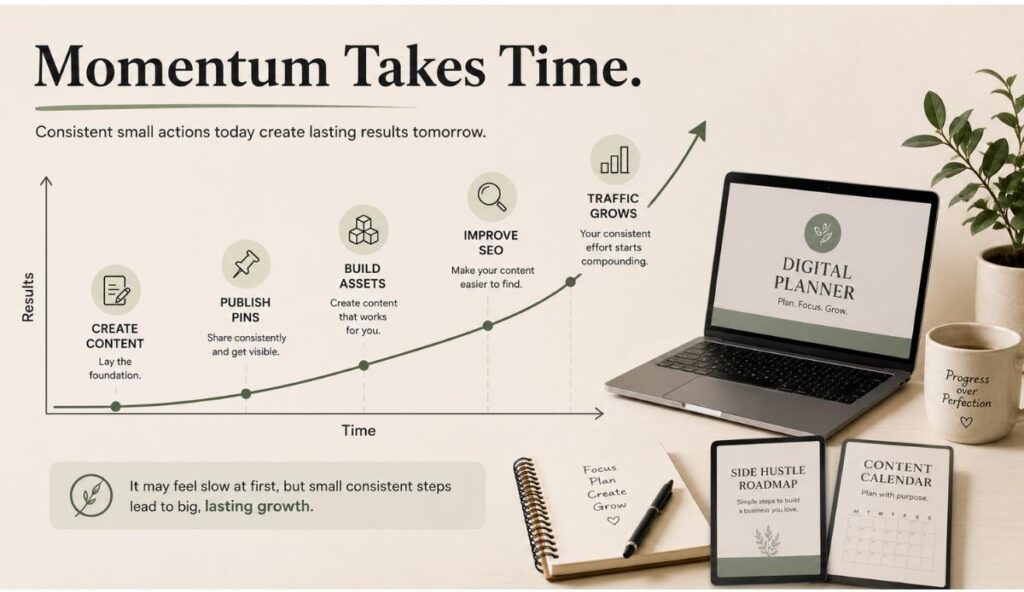
Pinterest may need time to understand your account. Google may need time to trust your site. Etsy may need time to test your listings. Readers may need to see your brand more than once before they trust you.
Pinterest’s own business guide recommends creating new original pins regularly, adding URLs, and organizing pins into clear boards to help with consistency and discovery. You can see their advice here: Pinterest Business Pin Guide.
That is the boring answer, but it is also the real answer. Most people quit during the quiet phase.
The people who grow are usually the ones who keep improving while the numbers still look unimpressive. They do not just post and pray. They test better titles, improve product photos, write clearer descriptions, create more useful content, build internal links, and study what gets impressions instead of ignoring the data.
That is how momentum starts. Not overnight, but slowly. Then, if you stay with it long enough, the growth can start to feel much easier.
Final Thoughts
If your side hustle still is not growing, it does not automatically mean you picked the wrong idea. It might mean you are switching too often. It might mean you are doing too many tasks that do not become assets. Or it might mean you are quitting before the system has enough time to work.
The goal is not to chase every new opportunity online. The goal is to build something useful, give it enough time, and create assets that keep working even when you are not starting from zero every week.
That is how a side hustle starts becoming something bigger.
And honestly, that is the kind of growth worth building.
Leave a Reply