Daily Pulse · April 28, 2026
Most people hear “Federal Reserve meeting” and immediately check out.
Eyes glaze over. Brain goes elsewhere. “That’s for economists and Wall Street guys,” they think.
But here’s the thing: what the Fed decides today will quietly ripple into your savings account, your credit card bill, and your investment portfolio. Whether you pay attention or not.
So let’s make this simple.
What’s Happening Today?
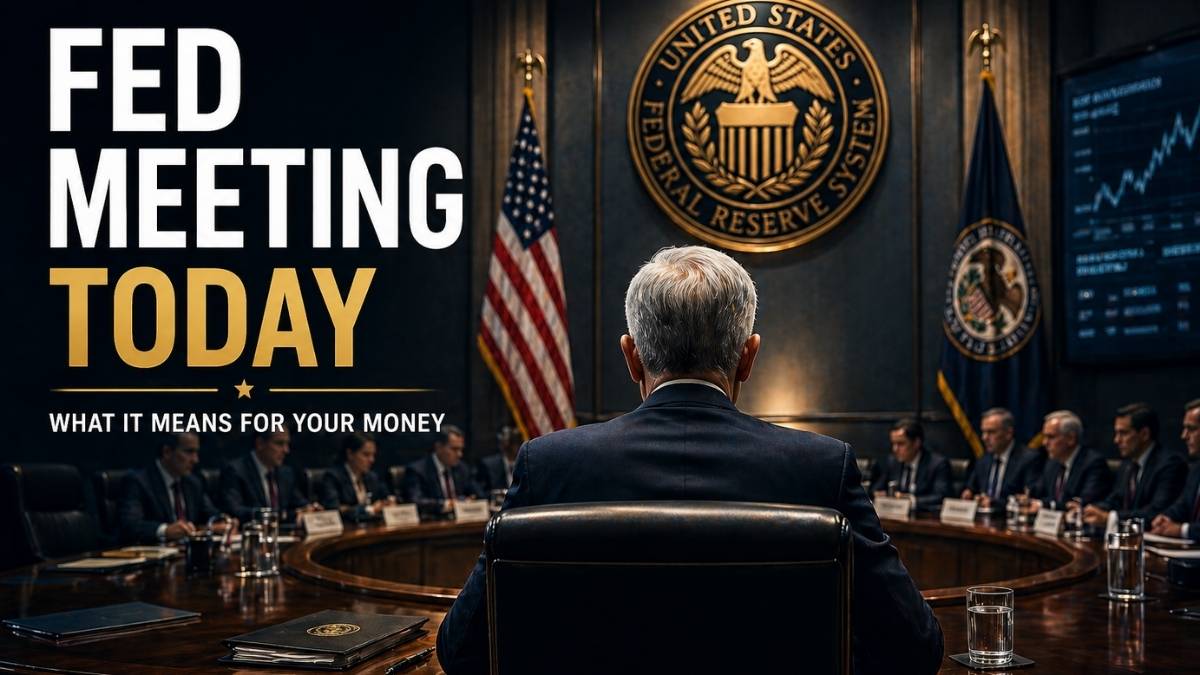
The Federal Reserve is holding its April meeting right now — and almost every analyst on the planet expects them to keep interest rates exactly where they are. No cut. No hike. Hold.
Why? Because the Middle East conflict has sent oil prices surging past $100 a barrel, and the Fed is watching carefully to see how that filters through into everyday prices, your groceries, your petrol, and your utility bills. They’re not ready to move until the picture gets clearer.
Oh, and one more thing: this may actually be Jerome Powell’s last meeting as Fed Chair. His likely successor is already waiting in the wings. A changing of the guard at the world’s most powerful financial institution. No big deal, right?
What Does This Actually Mean for YOU?
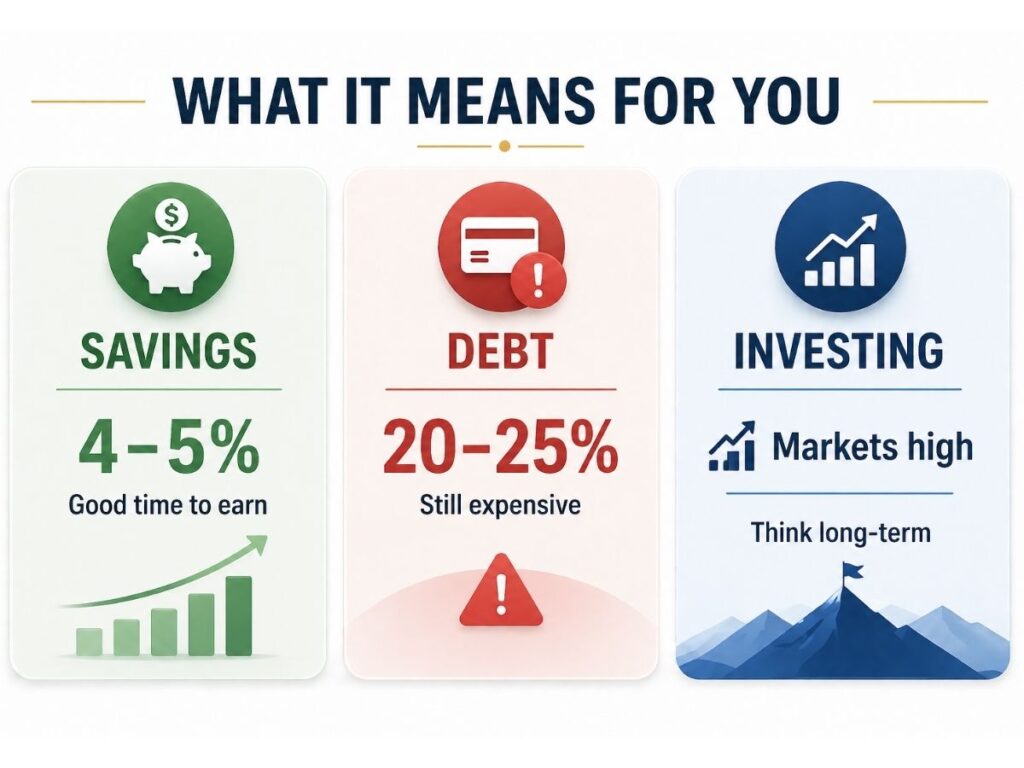
Your savings: High-yield savings accounts are still paying solid interest, somewhere between 4–5% annually in many places. That means your emergency fund is actually working right now. If yours is sitting in a regular bank account earning 0.5%, today is a good day to fix that.
Your debt: Rates on hold means your credit card interest isn’t getting worse. But it’s still brutal; most cards charge 20–25% annually. The Fed holding rates is not a reason to relax. It’s a reason to attack that debt while conditions are stable.
Your investments: Markets are near record highs despite all the noise. The S&P 500 closed at a record 7,173 yesterday. That might feel scary — is it too late to invest? It almost never is, if you’re thinking long-term. Volatility isn’t a warning sign. It’s just Tuesday.
The Bottom Line
The Fed doesn’t build your wealth. You do.
But understanding what they’re doing — and more importantly, what it means for your actual life — is the difference between reacting emotionally to financial news and making calm, smart decisions.
Rates on hold. Economy resilient. Your move.
Want to understand how interest rates affect your savings and investments? Read our full guide: What is Compound Interest? The “Magic” Way to Grow Your Money
Leave a Reply