
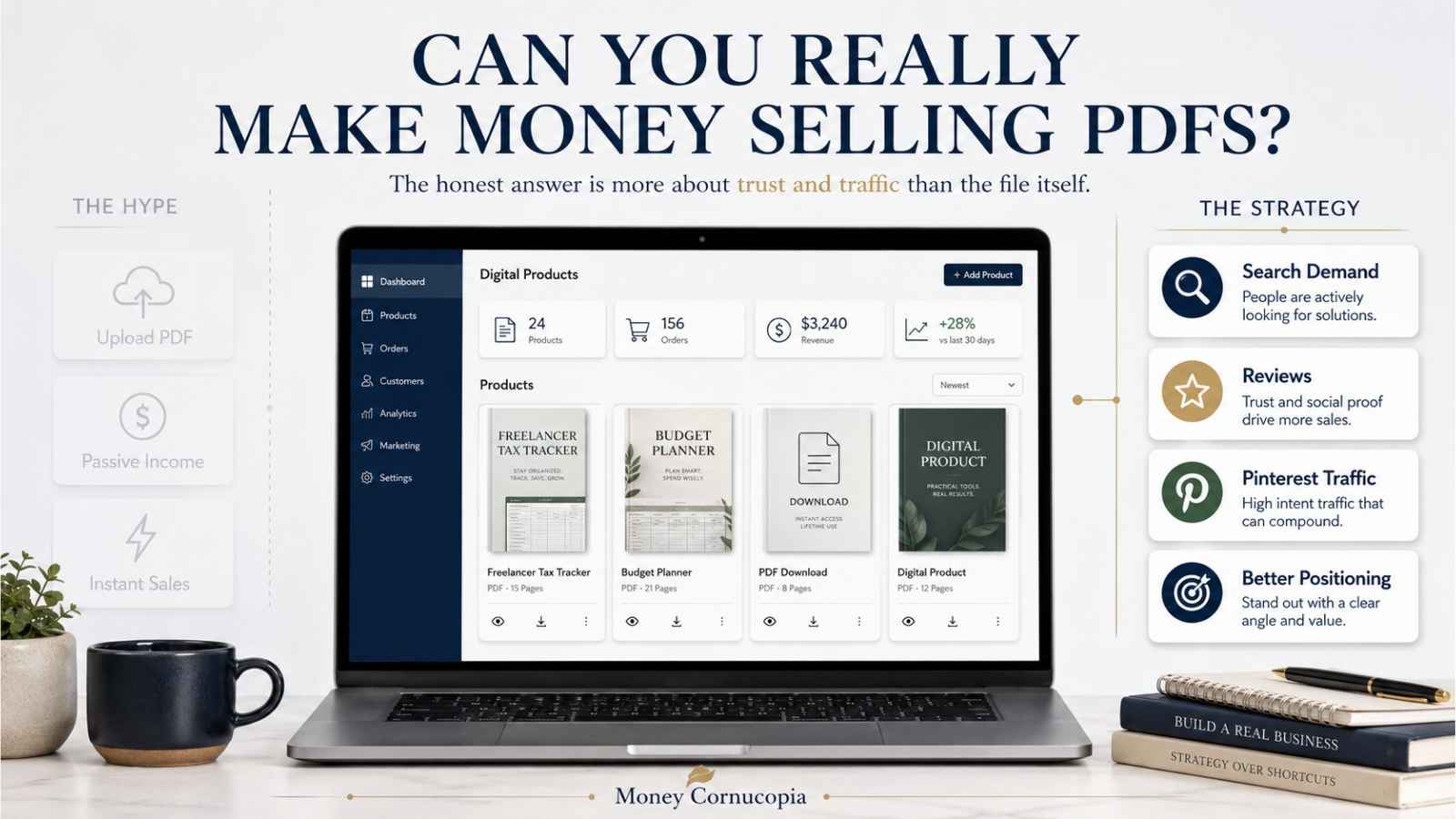
I sell PDF-based digital products: a freelancer tax tracker and a budget planner, both made in Canva and delivered instantly after purchase.
So far, I have made zero sales.
That might sound like proof that selling PDFs does not work. I do not think that is the full answer. The more honest answer is that PDFs can sell, but the file itself is rarely what makes the sale happen.
If you have spent any time on YouTube or Instagram recently, you have probably seen the opposite claim. Create a simple PDF, sell it for a few dollars, and watch passive income roll in. Some videos go further: build a landing page, link it from your Instagram bio, automate a few DMs, and the PDF practically sells itself.
I want to give you the honest version of this, based on what I have actually experienced and what I found when I looked closely at why some PDFs sell and others, including mine, do not.
Quick Answer: Can You Make Money Selling PDFs?
Yes, but not because they are PDFs.
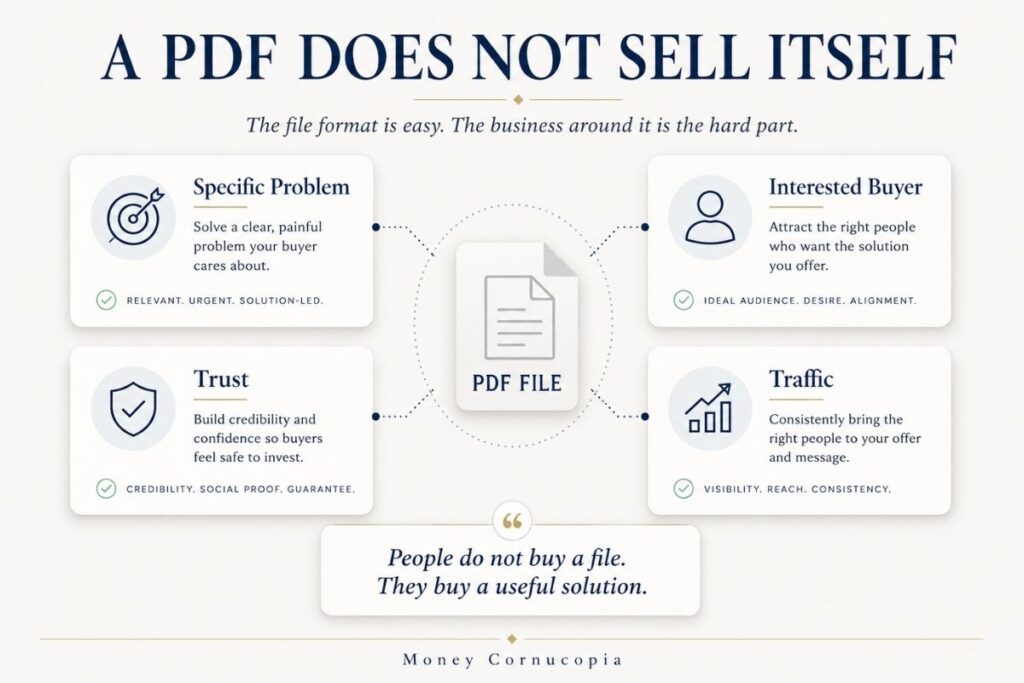
A PDF is just a file format. It is cheap to produce, instant to deliver, and easy to create. None of that makes it sell. What makes a digital product sell is whether it solves a specific problem for a specific person who is already looking for a solution and trusts the seller enough to pay for it.
Most advice about selling PDFs focuses entirely on the file format and almost never on the actual reason people buy things. That gap is where most beginners, including me, get stuck.
Table of Contents
Why PDFs Still Sell
The format has real advantages, and they are worth understanding before dismissing the whole idea.
A PDF can be created once and sold an unlimited number of times with no additional production cost. Delivery is instant, removing the friction of shipping or waiting. The barrier to creating one is extremely low, which is exactly why marketplaces are full of them. This is exactly why marketplaces like Etsy are full of PDF planners, trackers, templates, and printable downloads.
These advantages are real. They are also the reason the market for PDFs has become so crowded that the advantages themselves stopped being a differentiator.
The Real Problem: Specific Has Become the New Generic
This is the part nobody talks about, and it is the most important thing I have learned.
The standard advice for years has been simple. Do not make a generic “Budget Planner.” Make a specific one. “Budget Planner for Freelancers Who Get Paid Biweekly.” Specificity, the advice says, is what makes a product sell.
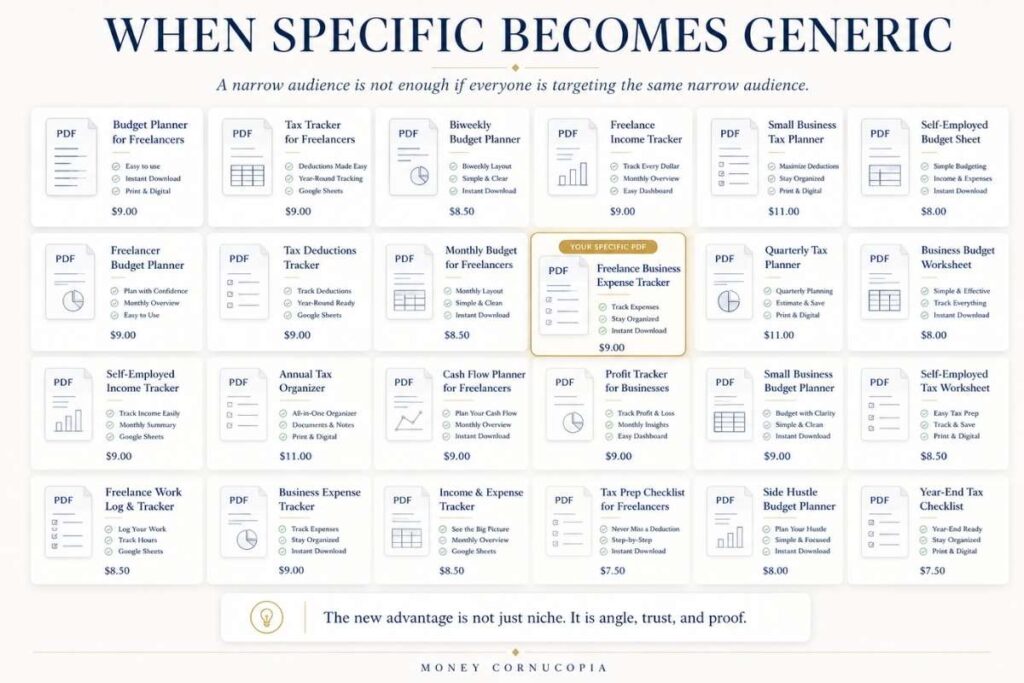
The problem is that this advice is now years old, and everyone has read it.
My freelancer tax tracker is specific. It targets a real, narrow audience with a real, narrow problem. But so do hundreds of other tax trackers built around the same advice. The specificity that was supposed to make my product stand out is the same specificity that thousands of other sellers landed on too, because we all read the same advice and reached the same conclusion.
An entire category can become saturated with “specific” products until the category itself functions like a generic one again. My product is not generic because it lacks a clear audience. It looks generic because hundreds of other products also have a clear, narrow audience, often the exact same one.
Can You Make Money Selling PDFs With No Audience?
Yes, but the path looks completely different from the one most beginners imagine.
This is the question most people are actually asking when they search “can you make money selling PDFs.” Not whether PDFs work in theory, but whether they can work for someone with no followers, no email list, and no existing traffic.
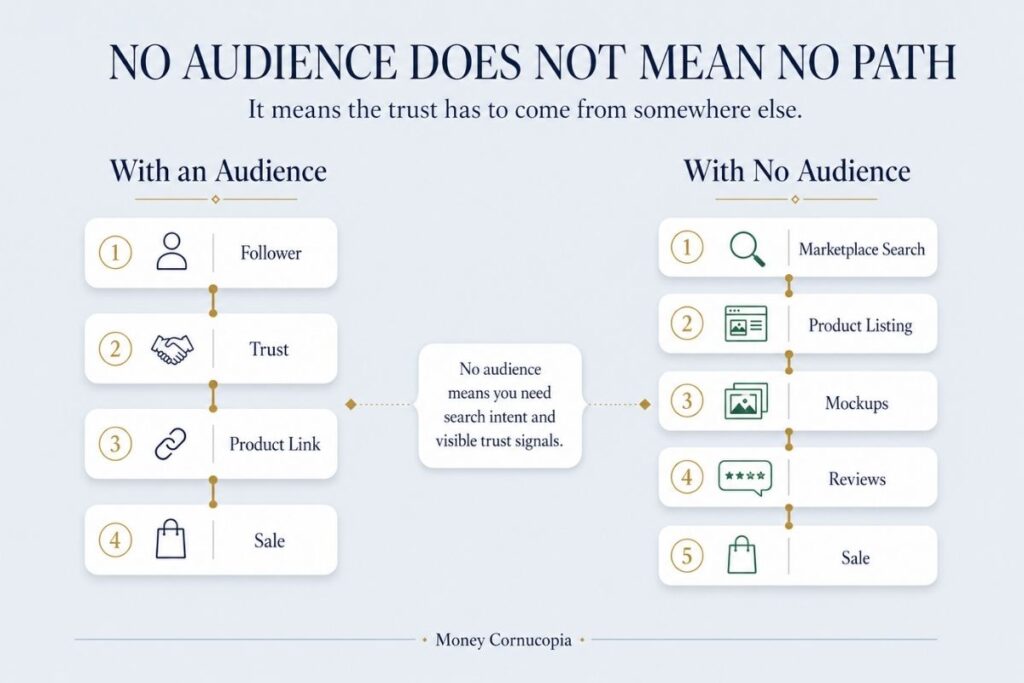
The honest answer is that “no audience” does not mean “no path.” It means your path runs through marketplace search traffic instead. Platforms with built-in search, where buyers arrive already looking for something, give you a substitute for an audience. Someone typing “budget planner for freelancers” into a marketplace search bar is, in that moment, behaving like a member of your audience even though they have never heard of you.
The catch is that marketplace search traffic does not solve the trust problem the way an audience does. When someone follows you, reads your content, or has seen your work before, they extend you a small amount of trust automatically. A stranger arriving from search extends you none. That missing trust has to come from somewhere else, usually reviews, ratings, or how professional the listing looks compared to competitors.
So the real answer to “can you make money with no audience” is: yes, through search-driven platforms, but you are trading the audience-trust problem for a reviews-trust problem, and reviews take time to accumulate just as an audience does.
The Instagram and Landing Page Funnel: Does It Actually Work?
This is the version of PDF selling promoted most aggressively right now, and it deserves an honest look.
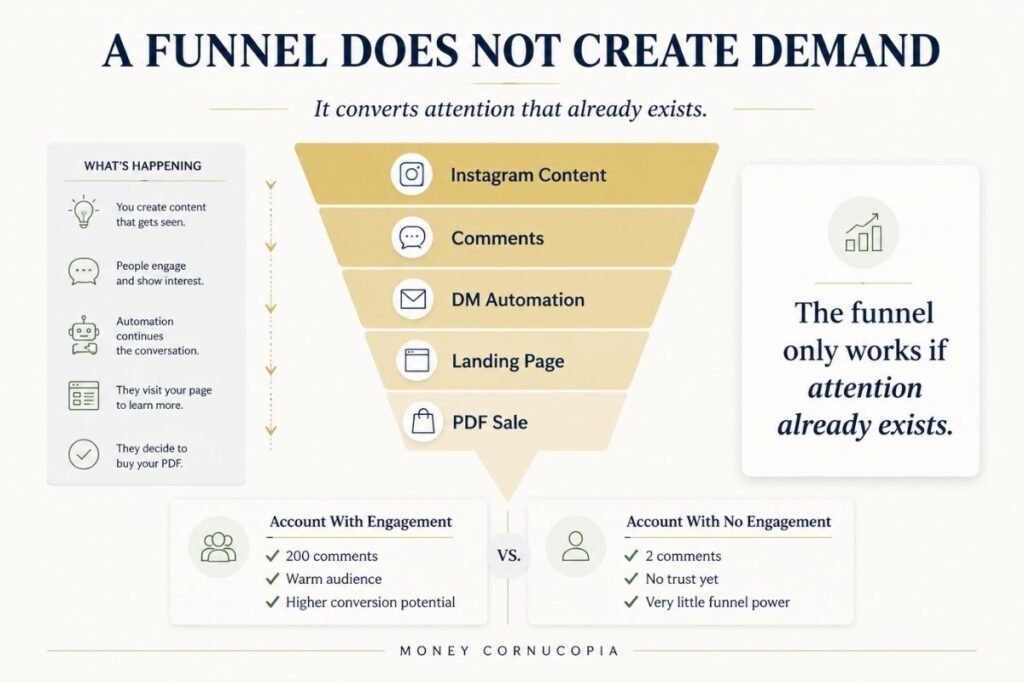
The pitch usually goes like this. Build a simple landing page. Put the link in your Instagram bio. Post content that drives people to comment a trigger word. A DM automation sends them to your landing page. They buy your PDF. Repeat.
The mechanics of this work. The tools exist and function as described.
But marketing guides describe Instagram sales funnels as relationship-based systems built around content, trust signals, and conversations, not simple landing page conversions. The funnel does not generate the audience. It converts an audience that already exists.
Every demonstration of this funnel assumes the account already gets meaningful engagement, comments, and followers. The funnel turns 200 comments into 30 to 50 buyers instead of 4. It does nothing for an account that gets 2 comments.
This is the same lesson I learned comparing platforms for selling digital products: the platform or funnel changes, but the traffic problem remains, something I explored in detail when comparing Gumroad and Etsy. A landing page with no traffic behind it is no different from a marketplace listing with no traffic behind it. Both are empty storefronts on quiet streets. The funnel is real. It is just not the part that matters for someone starting from zero.
What Actually Makes a PDF Sell Now
If specificity is saturated and funnels do not create audiences, what is left?
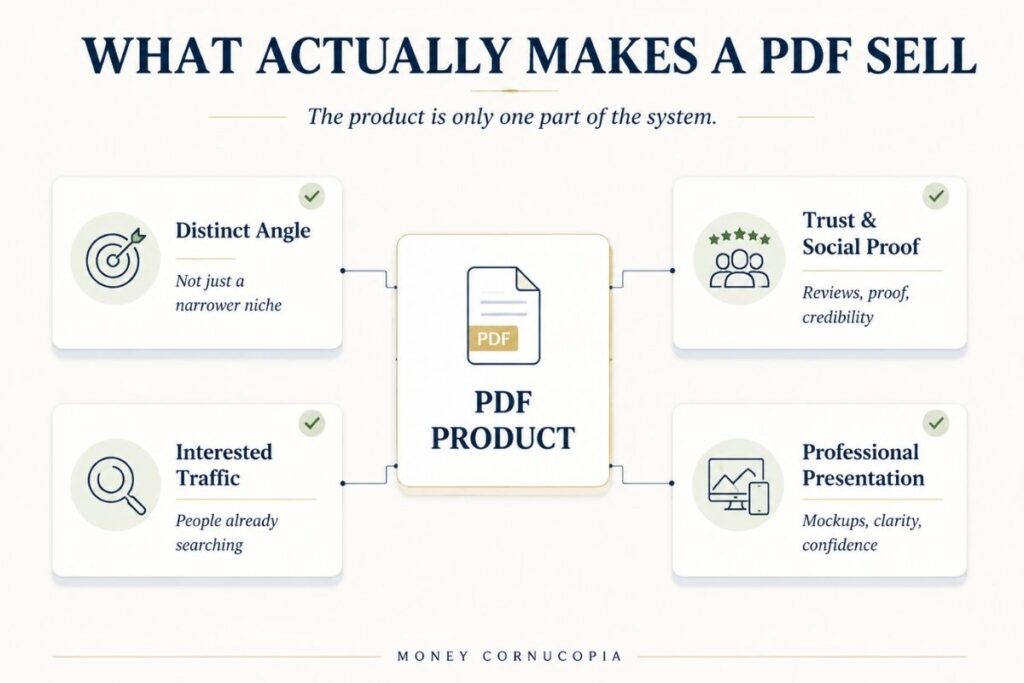
A different angle, not a narrower niche. This is the key distinction. Making your tax tracker more specific by narrowing the demographic further (freelancers who do X type of work, in Y country, earning Z amount) often just creates a smaller version of the same saturated idea. A different angle changes what the product is about, not just who it is for.
Take “Freelancer Tax Tracker.” A narrower-niche version might be “Tax Tracker for Freelance Designers.” A different-angle version is “Quarterly Tax Tracker for Freelancers Who Panic Before Tax Deadlines.” Same broad audience, but the angle is now the anxiety and timing around deadlines, not the demographic.
Take “Budget Planner for Biweekly Freelancers.” A different-angle version is “First Paycheck Budget Planner for People Who Always Run Out Before Month-End.” The audience is similar, but the angle is now a behavioral pattern, the recurring experience of running short before the month ends, rather than a pay schedule.
Trust and social proof. When I researched successful digital product shops on Etsy, looking closely at over 20 listings in one specific category, the pattern that separated consistent sellers from everyone else was reviews and social proof, not how the product was described. A product with a strong angle but zero trust signals still competes against established sellers with hundreds of reviews. Trust is the differentiator specificity used to be.
Traffic that arrives already interested. A PDF does not need to be discovered cold. It needs to reach someone already thinking about the problem it solves. I have been building a Pinterest presence that reaches tens of thousands of people each month with just 16 followers who are actively searching for solutions to specific problems. Someone searching for a budget planner on a platform built around search intent is in a completely different mindset than someone scrolling social media who happens to see an ad.
Packaging and presentation. Two products solving the identical problem can perform completely differently based on mockup quality, description clarity, and how professional the listing looks next to competitors. Design tools like Canva matter more here than people expect, not because better design creates demand, but because weak presentation can quietly destroy trust before a buyer reads a single word.
Examples of PDFs That Can Still Sell
The idea matters less than the angle. A budget planner is not automatically a good product. A budget planner built around a painful, specific situation has a better chance.
Categories that can still work include tax trackers, budget planners, business checklists, client onboarding forms, niche workbooks, printable planners, content calendars, freelancer templates, and worksheets for parents, students, or small business owners. Every one of these categories is crowded. The angle, not the category, is what separates a listing that sells from hundreds that do not.
Where People Actually Sell PDFs
The format works across many platforms. The honest differences are about traffic and fees, not the PDF itself.
Marketplaces like Etsy provide built-in search traffic, but place you in direct competition with established sellers who already have the reviews you do not. Direct-sales platforms like Gumroad and Payhip give you more control and lower fees, but require you to bring your own traffic entirely.
Selling directly from a blog or through an Instagram landing page works the same way as a direct-sales platform. You control everything, and you are entirely responsible for bringing the traffic yourself.
The honest takeaway is that no platform solves the traffic problem for you. Every platform is a delivery mechanism. The traffic and trust have to come from somewhere else, and that somewhere else is the actual business.
How Much Can You Realistically Make Selling PDFs?
The honest answer depends almost entirely on traffic and trust, not on the PDF.
For someone starting from zero, with no existing audience and no traffic source, the realistic first stretch often looks exactly like my own situation right now: real products, real listings, and zero sales while visibility and trust signals slowly build. This mirrors a broader pattern across my blog, Pinterest, and Etsy: real activity and growing signals, but no income yet, for months at a time.
For someone with an existing audience, whether that is a social following, an email list, or steady search traffic to a blog, even a modest PDF can convert because the trust and traffic already exist before the product does. The PDF becomes the easy part. The hard part, building the audience, was already done.
This is why income claims around PDF selling vary so wildly. The people sharing big numbers usually built an audience first and the PDF second. The hype content skips that part because “spend months building an audience” is a far less exciting pitch than “upload a PDF and watch the money come in.”
My Honest Self-Assessment
Here is what I think is actually going on with my own products.
My freelancer tax tracker and budget planner are specific in the way the standard advice says they should be. But they sit in categories with hundreds of similarly specific competitors, most of which have reviews and social proof that mine does not have yet.
I recently changed my pricing on these products after realizing price was not my actual problem. Working through this PDF question, I think the deeper issue is the same one. My products look like hundreds of other specific products, and without trust signals or traffic that arrives already interested, specificity alone was never going to be enough to stand out.
This is not a reason to abandon the products. It is a reason to focus on what actually moves the needle.
I covered the broader listing problems in my Etsy listings audit, where price turned out to be only one of several issues.
What I Would Do Differently Before Creating Another PDF
This is the checklist I wish I had used before building my first two products.
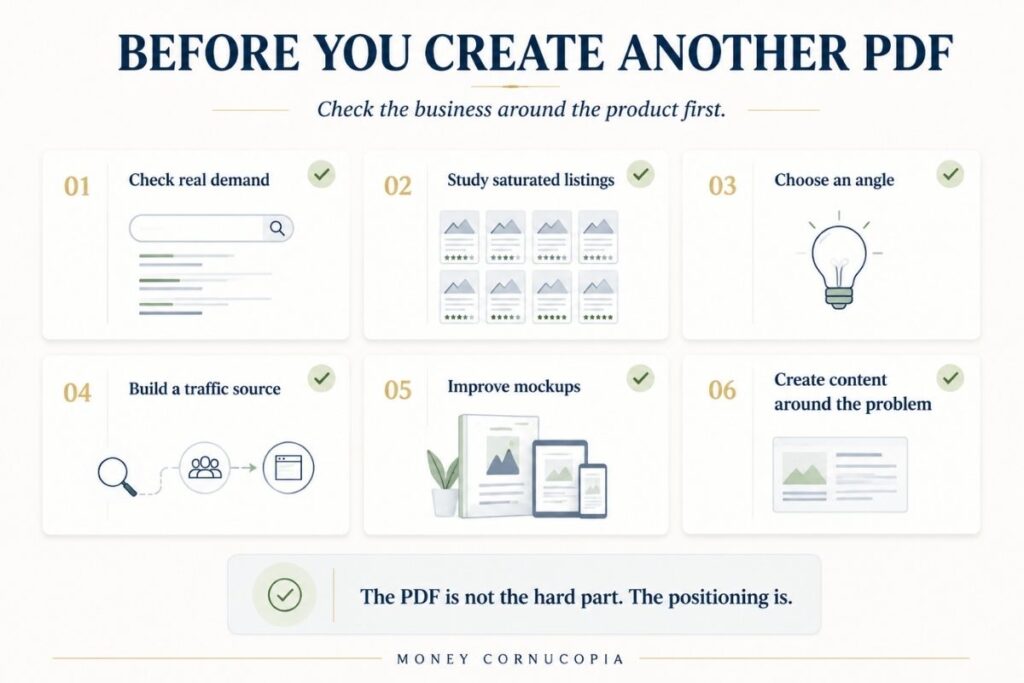
Check the actual demand before building anything. Search the category you are considering and see what already exists, how many listings there are, and how established the top sellers look.
Look at the saturated listings and ask what they all repeat. If every top listing in a category uses nearly identical language, demographic targeting, and structure, that repetition is the signal that the category has become commoditized, even if each individual listing still looks “specific.”
Choose an angle, not just a niche. Before narrowing who the product is for, ask what emotional moment, behavioral pattern, or timing the product addresses that existing listings do not.
Build a traffic source before expecting sales. Whether that is a Pinterest presence, a blog, or any other channel, building the path that brings people to the listing matters as much as the listing itself, and it takes time regardless of when you start.
Improve mockups and presentation before launch, not after. Presentation is one of the few trust signals a brand-new listing can control entirely on day one.
Create content around the problem, not just the product. An article, a pin, or a post that addresses the underlying problem brings people who are already thinking about that problem, which is a fundamentally different audience than people randomly browsing a marketplace.
Frequently Asked Questions
Can you really make money selling PDFs online?
Yes, but the PDF format itself is not what generates income. Income comes from solving a real problem for an audience that trusts you enough to buy, combined with traffic that arrives already interested in that problem. The format is simply the delivery method.
Is selling PDFs saturated?
Popular categories like budget planners, trackers, and templates have become crowded with similarly specific products, often because sellers followed the same well-known advice to “be specific.” This does not mean selling PDFs is impossible, but it means specificity alone is no longer enough to stand out. Trust signals, traffic, and a distinct angle matter more than they did when fewer sellers were in each category.
Can you make money selling PDFs with no audience?
Yes, but the path runs through marketplace search traffic rather than a built-in following. Search-driven platforms put your product in front of buyers who are already looking, substituting for an audience. The tradeoff is that you then need to build trust through reviews and social proof instead of through an existing relationship with followers, and that takes time either way.
Does the Instagram PDF selling funnel actually work?
The funnel mechanics work as described and can meaningfully improve conversion for an account with existing engagement. However, every demonstration of this funnel assumes meaningful engagement already exists. The funnel converts attention that already exists. It does not generate that attention from nothing, which is the part most promotional content does not emphasize.
What kind of PDFs sell best?
PDFs built around a distinct angle, something that addresses a specific emotional moment, behavioral pattern, or timing that existing competitors do not address, combined with social proof and traffic that arrives already interested in that problem. A narrower demographic alone is rarely enough, since most popular categories already contain many similarly narrow products.
How long does it take to make money selling PDFs?
This depends heavily on whether you have existing traffic or are building it from scratch. For someone starting from zero, the early stretch often looks like real products with zero sales while visibility and trust slowly build. For someone with an existing audience, the timeline can be significantly shorter because the traffic and trust already exist before the product is created.
Final Thoughts
Can you make money selling PDFs? Yes. People do it every day, across marketplaces, direct-sales platforms, and their own blogs and social accounts.
But the honest answer to “can you make money selling PDFs” is the same as the honest answer to almost every digital product question. The product is rarely the actual bottleneck. The bottleneck is trust and traffic, and those take time to build regardless of which file format, platform, or funnel you choose.
My PDFs are specific. They solve real problems. They also sit in categories full of other specific products solving the same real problems, most of which have something mine does not yet have: proof that someone else already bought and found it useful.
That is not a reason the PDF model is broken. It is a reason the PDF itself was never the hard part.
The PDF is not the business. The business is the problem you solve, the trust you build, and the traffic you earn.
Leave a Reply