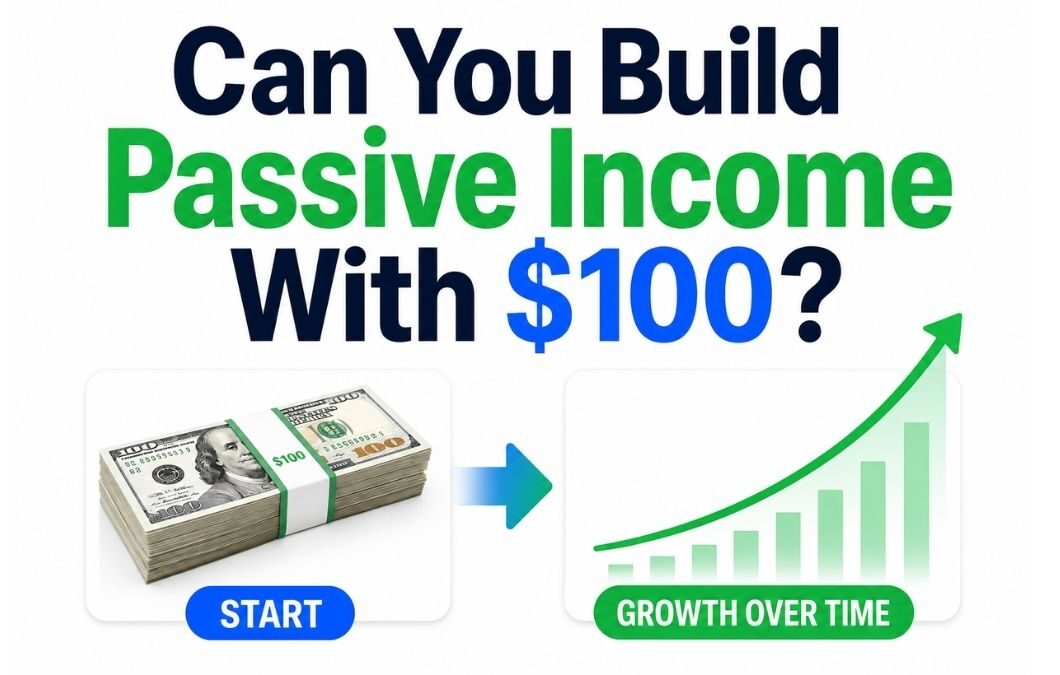
Quick Answer: Best Passive Income Ideas Under $100
If you only want the direct answer.
You can start passive income with under $100 using a few realistic methods:
- High-yield savings accounts
- Dividend ETFs
- Digital products (templates, guides, printables)
- Print-on-demand (design-based sales)
- Affiliate marketing
- Blogging or niche websites
- Stock photography or video
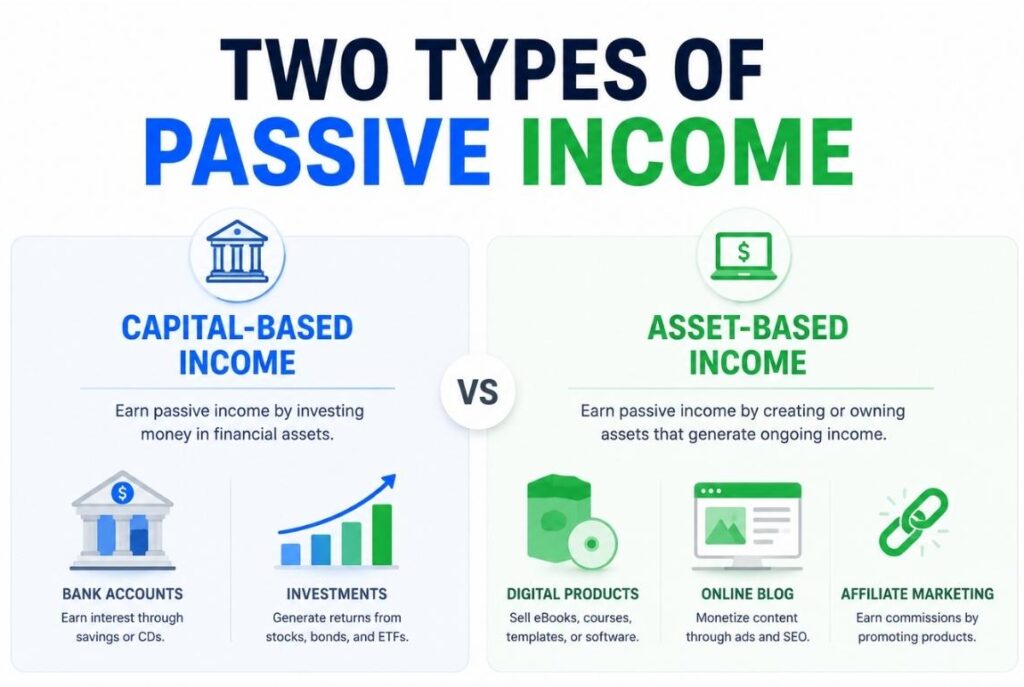
But these fall into two real categories:
1. Capital-based income (money works for you)
- Savings accounts
- Dividend ETFs
2. Asset-based income (you build something)
- Digital products
- Affiliate marketing
- Blogging
- Print-on-demand
- Stock content
Here’s the truth most beginners miss:
- Capital-based income is safe but grows slowly
- Asset-based income takes time but scales much higher
- Nothing meaningful happens instantly with $100
This guide will show you:
- what each method actually requires
- how long it really takes
- and which one fits your situation best
Most people fail not because they pick wrong — but because they expect results too early.
What this guide will help you do
Instead of giving you generic ideas, this guide helps you make a real decision.
You will learn:
- which passive income method fits your time and skills
- realistic income timelines (not marketing claims)
- what $100 can actually do in each system
- and why most beginners quit too early
The goal is simple:
Help you choose one path and actually stick with it long enough to see results.
Why this matters (important mindset shift)
Most people approach passive income backwards.
They look for:
“What can make me money fast?”
Instead of:
“What system can I consistently build for 6–12 months?”
This difference is exactly why most beginners fail before they ever see results.
Table of Contents
Can You Really Start Passive Income With $100 or Less?
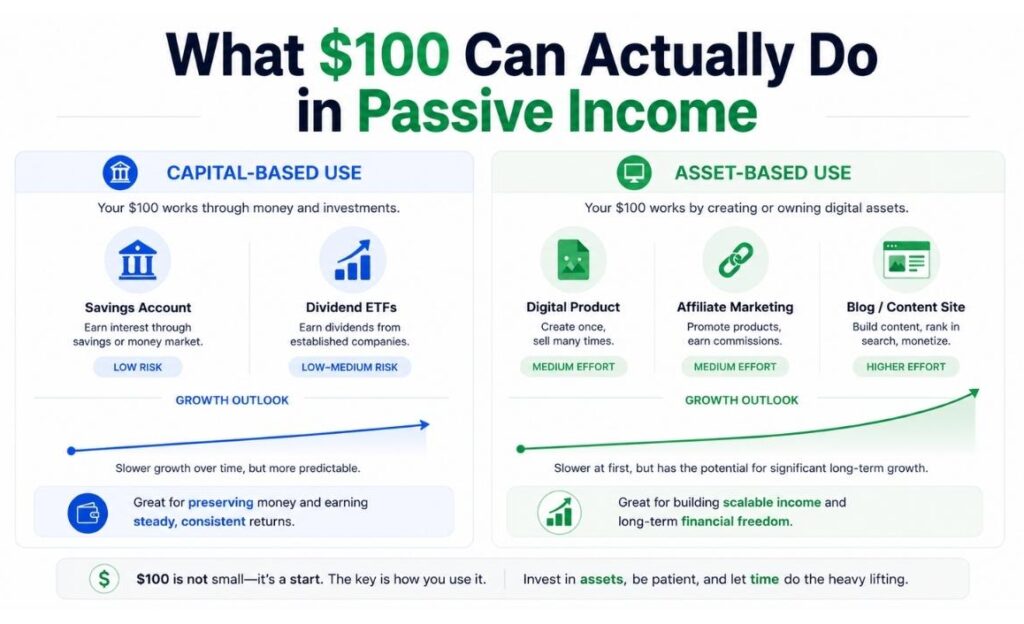
Yes — you can start passive income with under $100, but not in the way most people expect.
You won’t get meaningful income right away. Instead, you use $100 to either earn small returns through investing or build assets that can grow into income over time.
There are two realistic ways passive income starts with a small budget:
1. Money-based returns
Your $100 earns interest or dividends automatically.
Examples: high-yield savings accounts, dividend ETFs.
These are safe, but income starts very small at low balances.
2. Skill-based income assets
You use your time to build something once that can earn repeatedly.
Examples: digital products, blogging, affiliate marketing, print-on-demand.
These take longer but scale far higher over time.
The key point is simple: $100 doesn’t create passive income by itself — it starts a process that builds income over time.
This is the honest picture. Most people quit during the setup phase because nobody told them how long it actually takes. You will not make that mistake.
3 Best Quick-Start Picks for Absolute Beginners
If you’re starting with under $100, don’t try everything. You’ll just dilute your effort and quit early.
Instead, pick one starting path based on your goal, not curiosity.
Here’s the correct priority order:
1. High-Yield Savings Account — Your Financial Base
Startup cost: $0 | Setup time: 10–15 minutes | Risk: None
This is the safest starting point and should be your default first move.
You’re not trying to “get rich” here — you’re simply putting your money in a place where it doesn’t lose value to inflation as quickly as a normal bank account.
Why this is #1:
- Zero effort after setup
- Zero risk
- Builds the habit of earning from money, not just saving it
- Gives you a stable base for future investing
Best for: anyone who is unsure where to start or feels overwhelmed
Use this free Compound Interest Calculator to see how a high-yield savings account could grow your money over time
2. Digital Products — Fastest Path to First Real Income
Startup cost: $0–$20 | Setup time: 1–4 weeks | Risk: Low (time only)
This is the first real income opportunity in this list.
You create something once (template, guide, planner), then sell it repeatedly.
Why this is #2:
- Fastest chance of earning your first $1–$100 online
- Scales without extra work per sale
- Builds a real digital asset, not just savings
Best for: people willing to learn basic design or research what sells
3. Print-on-Demand — Best “Set and Forget” Creative Option
Startup cost: $0 | Setup time: few hours per design | Risk: Low
You upload designs once, and platforms handle printing + delivery.
You earn a commission when something sells.
Why this is #3:
- No inventory or customer handling
- Can grow into passive catalog income
- Works best long-term, not instantly
Best for: creative beginners who can consistently upload designs over time
Important reality check
If you are expecting quick results, none of these will feel fast.
- Savings = immediate but tiny returns
- Digital products = slow start, then scaling income
- Print-on-demand = slowest start, but long-term passive potential
The mistake most beginners make is choosing based on excitement instead of which system they can stick with for 6–12 months.
What Every Beginner Must Understand Before Choosing a Strategy
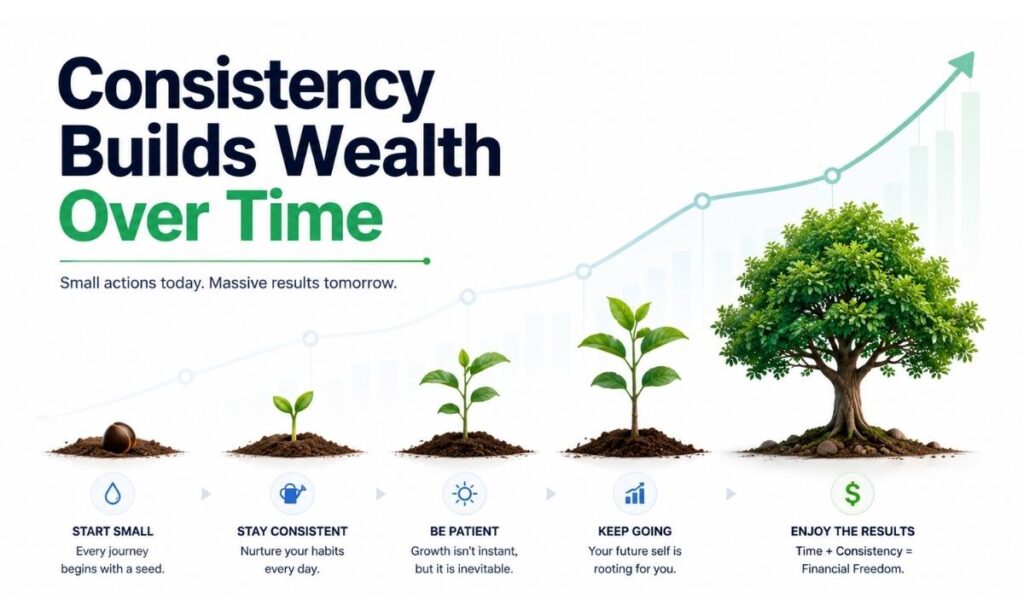
Most people fail at passive income not because they pick the wrong idea — but because they choose without understanding what actually drives results.
Before you choose any method, apply these four filters. If a strategy fails even one of them, it will not work for you long-term.
1. Time Commitment vs Reality
Passive income is built in the setup phase, not the earning phase.
Ask yourself:
- Can I consistently give 5–10 hours per week for 3–6 months?
- Or do I need something I can set up once and forget?
Why this matters:
Blogging, digital products, and affiliate marketing require sustained effort before any return appears. High-yield savings and dividend investing require almost no ongoing effort but grow slowly.
If your time expectation is wrong, the strategy will feel like it is “not working” when it actually is just in its build phase.
2. Risk Tolerance (Money vs Time Risk)
There are only two types of risk here:
- Financial risk: losing money (investing, ETFs)
- Time risk: investing effort without guaranteed returns (digital products, content)
Ask yourself:
- Am I okay with market fluctuations?
- Or do I prefer zero financial risk, even if growth is slower?
Key insight:
Beginners often fear financial risk but ignore time risk — even though time loss is what causes most failures.
3. Skill Fit (Your Hidden Advantage)
Your background determines your fastest path:
- Good at writing → blogging, affiliate marketing
- Good at design → print-on-demand, digital products
- Good at organization → templates, planners, Notion tools
- Good at research → niche websites, affiliate content
Why this matters:
You don’t start from zero. You start from whatever you already understand better than average.
Most people ignore this and choose based on “what sounds best,” which slows them down by months.
4. Time to First Meaningful Result
This is where expectations break.
Real timelines are:
- Savings accounts → immediate (but very small)
- Digital products → 1–6 months
- Affiliate/blogging → 6–18 months
- Print-on-demand → 3–12 months
If you expect income too early, you will quit before the system has time to compound.
The Simple Rule That Prevents Failure
If you forget everything else, remember this:
Pick the strategy you can consistently execute for 6–12 months, not the one that sounds most exciting today.
Excitement fades. Consistency compounds.
Passive income is not built by choosing the best idea — it is built by finishing the idea you actually stick with.
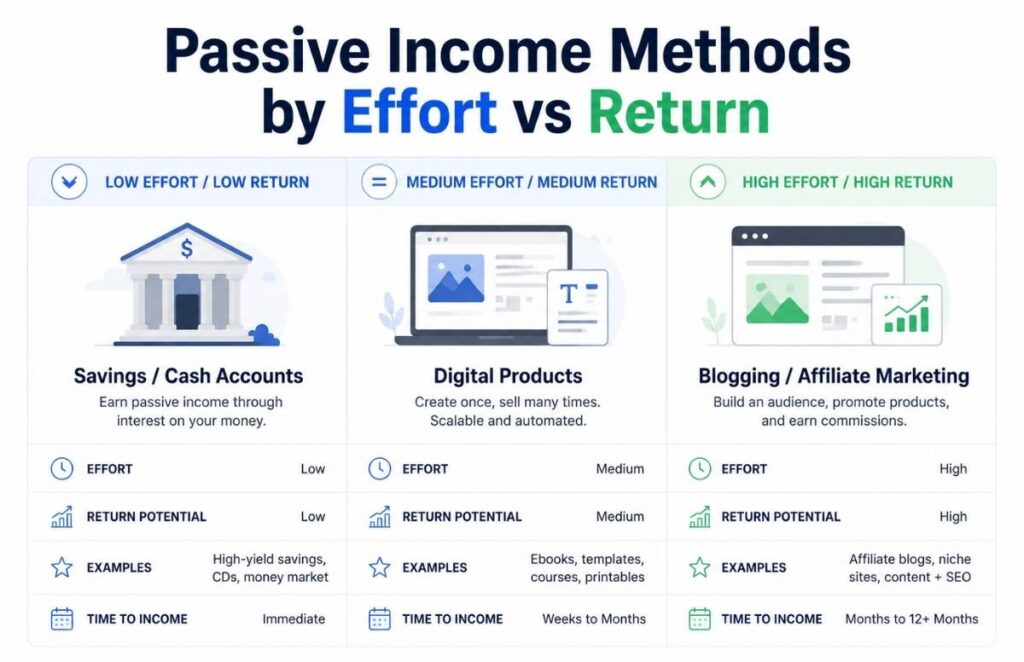
All 7 Methods: Side-by-Side Comparison
| Strategy | Startup cost | Effort level | First income | Risk | Income ceiling | ||||||||||||||||||||||||||||||||||||||||||||||||||||||||||||||||||||||||||||||||||||||||||||||||||||||||||||||||||||||||||||||||||||||||||
|---|---|---|---|---|---|---|---|---|---|---|---|---|---|---|---|---|---|---|---|---|---|---|---|---|---|---|---|---|---|---|---|---|---|---|---|---|---|---|---|---|---|---|---|---|---|---|---|---|---|---|---|---|---|---|---|---|---|---|---|---|---|---|---|---|---|---|---|---|---|---|---|---|---|---|---|---|---|---|---|---|---|---|---|---|---|---|---|---|---|---|---|---|---|---|---|---|---|---|---|---|---|---|---|---|---|---|---|---|---|---|---|---|---|---|---|---|---|---|---|---|---|---|---|---|---|---|---|---|---|---|---|---|---|---|---|---|---|---|---|---|---|---|---|
| High-yield savings | $0 | Very low | Immediate | None | Low to medium | ||||||||||||||||||||||||||||||||||||||||||||||||||||||||||||||||||||||||||||||||||||||||||||||||||||||||||||||||||||||||||||||||||||||||||
| Dividend ETFs | $1+ | Low to medium | 1st quarter | Low to medium | High (long-term) | ||||||||||||||||||||||||||||||||||||||||||||||||||||||||||||||||||||||||||||||||||||||||||||||||||||||||||||||||||||||||||||||||||||||||||
| Digital products | $0 to $20 | Medium | 1 week to 6 months | Low | High | ||||||||||||||||||||||||||||||||||||||||||||||||||||||||||||||||||||||||||||||||||||||||||||||||||||||||||||||||||||||||||||||||||||||||||
| Print-on-demand | $0 | Medium | 3 to 9 months | Low | Medium to high | ||||||||||||||||||||||||||||||||||||||||||||||||||||||||||||||||||||||||||||||||||||||||||||||||||||||||||||||||||||||||||||||||||||||||||
| Blogging | $30 to $60 | High | 8 to 18 months | Low to medium
Which Passive Income Strategy Is Right for You?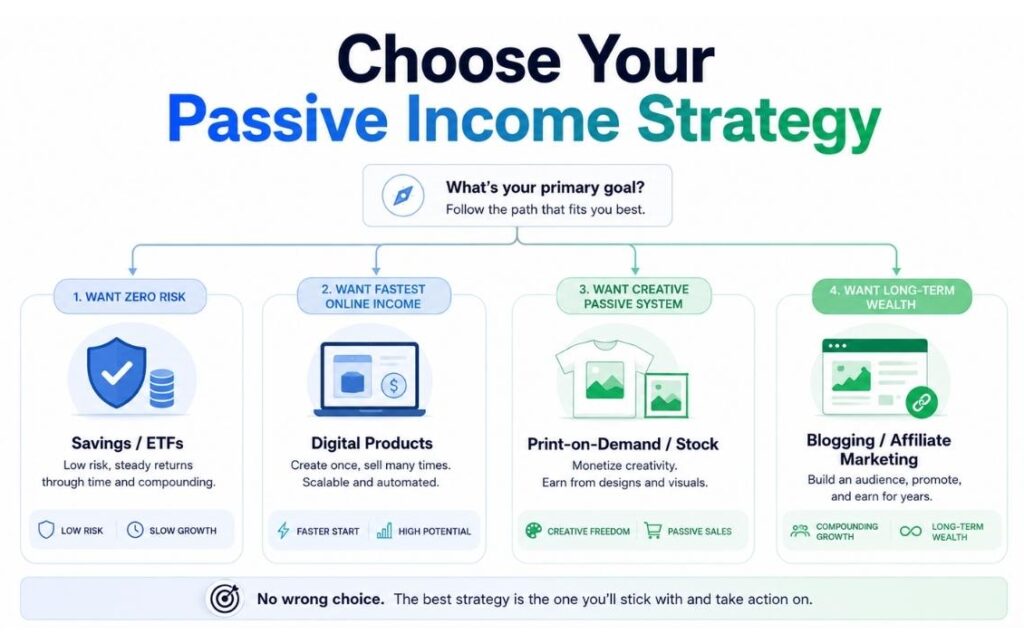 Use this section as a decision filter, not a list. Pick the scenario that matches you most closely. If you want zero risk and zero complexity → Start here
Why: If you want your first online income fastest → Choose this path
Why: If you are creative and can stay consistent → Choose this path
Why: If you can commit long-term (6–18+ months) → Choose this path
Why: If you’re still unsure → do this firstStart with a High-Yield Savings Account + one skill-based method This gives you:
You don’t need to “pick perfectly” right away — but you do need to start somewhere structured. The key principle most people ignore
Every method here works. 1. High-Yield Savings Accounts — Zero Risk, Instant Setup
Best for: Anyone starting with little money who wants zero financial risk and an immediate, if small, return on idle cash. Effort: Very Low — one-time setup, no ongoing management required. Return potential: Low to Medium — scales directly with balance over time.
Why It WorksAt $100, a 4.5% annual yield earns roughly $4.50 for the year. That is not a life-changing number. The strategic value is not in the early dollar amount — it is in two things: 1. Stopping the invisible loss. Money sitting in a standard bank account paying 0.01% while inflation runs at 3% loses real purchasing power every year even as the number stays flat. Moving $100 to a high-yield account is the simplest financial correction available — and it costs nothing. 2. Building the compounding foundation. The habit of directing money to productive accounts, and the growing balance that results from adding to it consistently, creates a financial base that makes every other strategy on this list more effective. The FDIC insures deposits up to $250,000 at member banks. Your principal is protected. No other strategy on this list offers that level of security. For a clear breakdown of what inflation does to savings over time and how to protect yourself, our guide on what happens when inflation outpaces your interest rate explains the mechanics directly. Realistic ScenarioMaria, 22, moves $80 from her checking account to a high-yield savings account at 4.3% APY and sets up a $20/month automatic transfer. By the end of year two, her balance is near $580 and her annual interest is over $24 — earned without a single additional action since the initial setup. How to Get Started
Beginner Mistake to AvoidSkipping this because $4 per year feels too small to matter. The early returns are minor — the habit and the base they build are not. 2. Dividend ETFs — Build a Compounding Investment Habit
Best for: Beginners who want real market participation and a long-term compounding investment habit. Works best when you contribute consistently over months and years. Effort: Low to Medium — setup takes one session; the real work is emotional (staying calm during market volatility). Return potential: High over the long term; minimal on a small starting balance.
Why It WorksDividend investing is one of the most well-established low investment passive income strategies in personal finance. When you own shares of a dividend ETF, you receive a portion of the profits those underlying companies distribute — whether or not you do anything that day. The mathematical reality of dividend income at small balances:
The people you see posting about living off dividends accumulated that capital over 10–20 years of consistent investing — or started with substantially more money than $100. Neither path involves a shortcut. Starting with $100 is not a waste: you are building the habit, learning the mechanics, and establishing the compounding foundation that grows meaningfully over time. For a clear picture of what consistent investment from small amounts looks like over 5, 10, and 20 years, our compound interest investments guide shows specific growth scenarios. Investopedia’s beginner ETF guide explains the mechanics before you open any account. For platform-specific recommendations in 2026, our guide to investing with $100 covers practical starting steps. See how compounding could build your investment over time using this free Compound Interest Calculator. Realistic ScenarioJames, a college student, puts $50 into a broad dividend ETF and adds $15/month from his part-time job. His first-year dividend income: roughly $6. But three years in, his balance has grown past $600 through contributions and compound growth — and his annual dividend income is approaching $25. The habit, the education, and the compounding base are now solidly in place. How to Get Started
Beginner Mistake to AvoidInvesting money you may need within 12 months, or selling during a market dip. Dividend ETF investing is a multi-year strategy. Short-term price drops are expected. Selling during them converts a temporary paper loss into a permanent real one. 3. Selling Digital Products — Create Once, Earn Repeatedly
Best for: Students, freelancers, teachers, and anyone with specialized knowledge or design skills who wants the fastest path to their first online sale. Effort: Medium — significant upfront work to research and create; genuinely passive once a product has reviews and search visibility. Return potential: High — one product, unlimited sales, zero inventory cost.
Why It WorksThe economics of digital products are fundamentally different from physical products. Once the file exists, selling one copy costs exactly the same as selling ten thousand. No inventory. No shipping. No per-unit cost. A four-hour project can sell at 2am on a Tuesday to someone in a different country while you sleep — and then again the next day to someone else entirely. Platforms like Gumroad charge zero monthly fees — only a percentage per sale — making the true startup cost zero. Etsy charges a small listing fee per item but delivers built-in search traffic from millions of active buyers, a significant distribution advantage for new sellers without an existing audience. What Actually Sells: High-Performing Categories for Beginners
The common thread: specificity sells. A generic budget spreadsheet competes with thousands of free versions. A “travel nurse budget and expense tracker for 13-week contracts” serves a specific person with a specific problem — and that person pays. Market research is more important than creative ability. Before building anything, spend time on Etsy searching what is selling in your target niche. Look at products with reviews. Look at what has recent sales. Build toward demonstrated demand, not personal preference. Realistic ScenarioPriya, a nursing student, creates detailed pharmacology study guides in Canva and lists them on Etsy at $4–$7 each. Months 1–2: $38 total. Month 6: $90–$120/month from accumulated reviews and Etsy search visibility — earned from the same products she built in the beginning. The two months of concentrated work are now generating consistent recurring income. How to Get Started
Beginner Mistake to AvoidBuilding a product based on what you want to make rather than what buyers are actively searching for. Market research before creation is the single most important step in this model. 4. Print-on-Demand — Earn Royalties Without Inventory
Best for: Beginners with some design interest or ability who want a zero-cost, zero-inventory side income stream they can build gradually. Effort: Medium — design creation is accessible with free tools; discoverability within a competitive marketplace requires strategic niche focus and consistent output. Return potential: Medium to High — grows as catalog size and organic search rankings compound over time.
Why It WorksPrint-on-demand removes every traditional barrier to selling physical products. No capital tied up in inventory. No shipping logistics. No customer service. Platforms like Redbubble and Merch by Amazon handle every operational element after your design goes live. Canva’s free tier has enough capability to create professional designs without prior graphic design training. The technical barrier is genuinely low. The strategic challenge — getting designs discovered within marketplaces hosting millions of competing items — is where focused effort is required. Niche Strategy: The Decision That Determines EverythingGeneric designs are invisible. Specific niche designs reach buyers with high purchase intent. Think in specifics: not “dog lovers” but “rescue dog owners who do yoga.” Not “teachers” but “middle school science teachers who love true crime podcasts.” The more specific the niche, the less competition and the more enthusiastic the buyer tends to be. Within a chosen niche, catalog volume matters. Organic search rankings on these platforms compound as more designs accumulate. Consistency — regular uploading of themed, niche-focused designs over months — is the mechanism that builds income. Sporadic uploads in random categories earn almost nothing. Realistic ScenarioCarlos, a graphic design student, spends weekends building a themed catalog around specialty coffee culture on Redbubble. After four months and roughly 90 designs, he earns his first sale. By month eight, he is generating $40–$60/month passively from a growing catalog. Real recurring income from upfront creative work, with no inventory and no shipping. How to Get Started
Beginner Mistake to AvoidUploading sporadically across unrelated categories and abandoning the account after 60 days with no sales. The income curve on print-on-demand tilts upward sharply after a niche-focused catalog reaches critical mass — but that takes consistent output over 6–9 months to get there. 5. Blogging or a Niche Website — The Highest Long-Term Ceiling
Best for: People who can genuinely commit to 12–24 months of consistent publishing, have real expertise or deep interest in a specific niche, and are willing to invest in the longest timeline in exchange for the highest long-term income potential. Effort: High — sustained, consistent effort across the full first year before meaningful income typically appears. Return potential: Very High — the highest ceiling of any strategy on this list.
Why It WorksA niche content site is the only strategy on this list where the income ceiling is, practically speaking, uncapped. Established sites earn simultaneously through multiple channels — display ads running 24/7, affiliate commissions from product recommendations, digital product sales, and occasional sponsored content — all from the same base of content. In 2026, the quality bar has risen considerably. Thin articles, recycled advice, and AI-generated summaries without genuine insight no longer rank reliably. What earns durable rankings is depth, demonstrated expertise, and content that reflects real understanding of a specific topic and audience. This is exactly the approach that drives traffic to sites like this one — where every piece is grounded in actual financial thinking rather than surface-level rewrites. Articles like our guide to building wealth from scratch earn ongoing traffic because they go deeper than the generic alternatives. That depth is what you are aiming to replicate in your own niche. Niche Selection: The Most Important Choice You MakeThe right niche sits at the intersection of three things:
Avoid niches that are:
The Technical Setup (Under $60 Total)
Realistic ScenarioAisha works full-time in healthcare. She starts a niche blog focused on financial decisions specific to healthcare workers — student loan repayment, travel nursing income, contract negotiation. She publishes two well-researched articles per week for 14 months. Month eight: first display ad revenue of $30. Month 18: $400/month consistently, with publishing reduced to once a week. The existing archive keeps earning. How to Get Started
Beginner Mistake to AvoidWriting broadly about everything and ranking for nothing. Niche focus consistently outperforms broad topic coverage in the critical first two years of a content site. 6. Stock Photography and Video — Get Paid for Content You Already Create
Best for: People who already take photos or record video for any purpose and want to convert existing content into a recurring passive revenue stream with minimal additional effort. Effort: Low to Medium — creating and uploading content; keyword optimization per submission is essential. Return potential: Medium — scales directly and predictably with portfolio size.
Why It WorksStock photography converts content you may already be creating into permanent, recurring income assets. Every approved file in your portfolio is a passive earner — it can be downloaded today, next month, or three years from now, generating royalties each time without any action required from you. The three major platforms for beginners:
Why Video Consistently Outperforms PhotosShort video clips — 10 to 30 seconds of clean, usable B-roll — command higher royalties than still images across most platforms and are in persistent demand from content creators, marketers, and publishers. If you already record video for any reason, clean footage of everyday activity, food, nature, or urban environments uploaded to stock platforms requires almost no additional workflow. What Gets Rejected (And How to Avoid It)Every submission is reviewed. Common rejection reasons:
The model release requirement catches most beginners off guard. Any identifiable person in a commercial photo requires a signed release form. Most public spaces and architecture do not require property releases — but check each platform’s contributor guidelines before uploading in volume. How to Get Started
Beginner Mistake to AvoidUploading content without keyword research. Stock platforms function as search engines. A technically excellent photo with weak keyword tags earns nothing. The same photo with precise, buyer-relevant tags earns repeatedly. 7. Affiliate Marketing — Earn Commissions From Content That Lasts
Best for: Beginners comfortable creating content on free platforms (YouTube, Pinterest, Medium) who understand that trust-building must precede commissions by several months. Effort: Medium to High — content creation and audience building require sustained output before income appears. Return potential: High — quality content with affiliate links can earn commissions for years after the original publication date.
Why It WorksAffiliate marketing scales differently from any other income stream on this list. Capital-based strategies require more money to earn more. Asset-based strategies like stock photography require more volume. Affiliate marketing requires more trust and relevance — both of which compound over time without proportional increases in financial investment. A single well-ranked article or video reviewing a product with genuine purchase intent can earn commissions for years. It does not expire. It does not cost more to serve one reader or ten thousand. Unlike display advertising, commission rates often scale with the value of what someone buys — meaning one well-placed recommendation on a high-value product can outperform hundreds of ad impressions. Two Beginner Programs Worth Knowing
The Content-First Principle (Non-Negotiable)Affiliate marketing only works when the surrounding content is genuinely valuable independent of any affiliate link. Content that exists primarily to earn a commission is immediately recognized by readers and increasingly filtered by search algorithms. The sequence that converts:
Pinterest as a free distribution channel: For personal finance, home, and lifestyle niches, a single well-designed pin can route consistent traffic to affiliate content for months or years passively — with no ongoing maintenance after the initial upload. Realistic ScenarioTom starts a YouTube channel reviewing budget home gym equipment and joins Amazon Associates. His first five videos receive minimal views. By his fifteenth video, one product review begins ranking in YouTube search. Over the following six months, that single 90-minute video generates $40 in Amazon commissions. He does not touch the video again. It continues earning indefinitely. How to Get Started
Beginner Mistake to AvoidSelecting topics based on commission rates rather than genuine audience relevance. High-commission products that nobody in your audience actually needs convert at near zero. Relevance and trust determine commissions — not the commission rate alone. Honest Timeline: How Long Does Passive Income Actually Take?Most beginners underestimate timelines — and that is the main reason they quit too early. Passive income does not fail because the idea is wrong. It fails because the expectation of speed is wrong. To understand this properly, you need to separate passive income into three phases: Phase 3: Meaningful income (noticeable monthly cash flow) Phase 1: Setup (no income yet) Phase 2: First earnings (small, inconsistent income) Here are honest timelines:
What these timelines actually mean 1. The first phase feels like nothing is happeningFor most strategies, the first 1–3 months produce:
This is where most people quit. But this phase is not failure — it is setup and signal building. 2. Small income comes before stable incomeWhen income finally starts, it usually looks like:
This is normal. It is the system testing market demand. 3. Real income comes from compounding, not initial effortThe biggest mistake beginners make is assuming:
In reality:
The truth most people don’t tell youIf you want $100/month or more from passive income:
No version bypasses this structure. Why people quit too earlyAlmost everyone quits during this phase:
But in most real cases:
The correct mindset shiftInstead of asking:
Ask:
That single shift determines success more than strategy choice. The Recommended Starting Path for Beginners With $100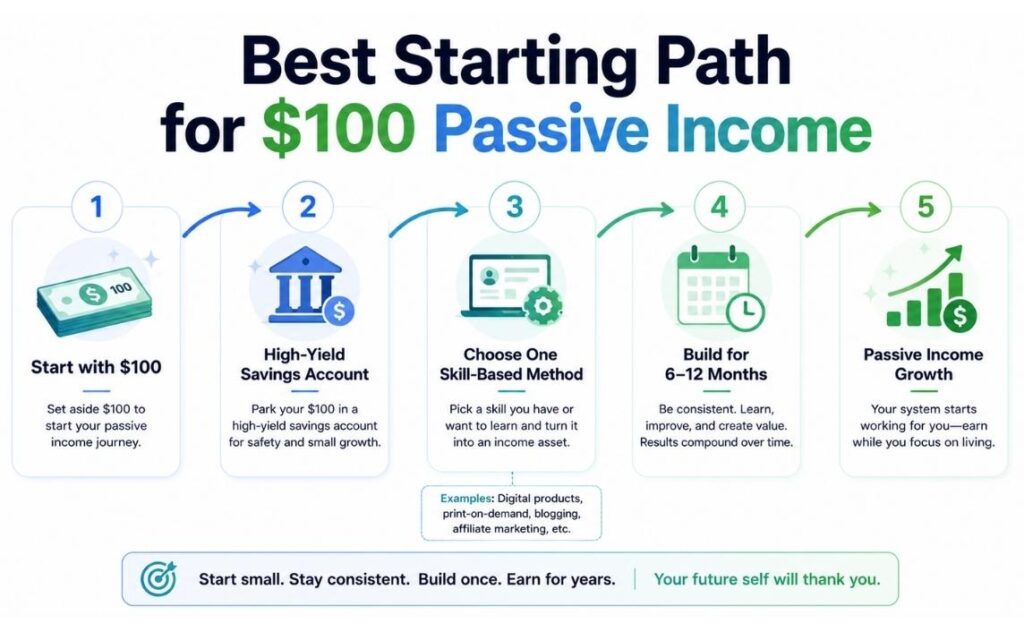 If you have $100 and no current passive income, this sequence is the most reliable starting path: Week 1 — Establish your financial base: Open a high-yield savings account paying 4%+ APY. Move your $100 there. Set up the smallest automatic monthly contribution you can manage — even $10. This runs passively from this point forward regardless of which other strategy you choose. Weeks 2–3 — Choose one time-based strategy: Review the comparison table and the decision guide above. Choose the single strategy that best matches your current skills, available weekly hours, and patience for delayed income. Do not start two strategies simultaneously. Months 1–3 — Learn before you earn: Treat this as an education phase, not an income phase. If you chose digital products, spend this time researching what sells before creating anything. If you chose affiliate marketing, study your niche and content formats. If you chose blogging, write your first ten articles before expecting traffic. The foundation built here determines whether months 6–12 produce income. Months 3–9 — Consistent output: This is the phase that most people plan to do and few actually complete. Consistent, niche-focused effort — regular uploads, articles, listings, or designs — is the mechanism that builds compounding passive income. Treat it as a part-time commitment with a specific weekly time block. Months 6–12 — Evaluate and adjust: By now you have real data. Which content, designs, or products are gaining traction? Double down on what is working. Improve or retire what is not. This is also the right time to consider adding a second income stream — once the first is generating consistent results. The principle that matters most: One strategy, executed consistently across the full timeline, outperforms three strategies executed sporadically across the same period. Every time. 5 Mistakes That Kill Most Passive Income Attempts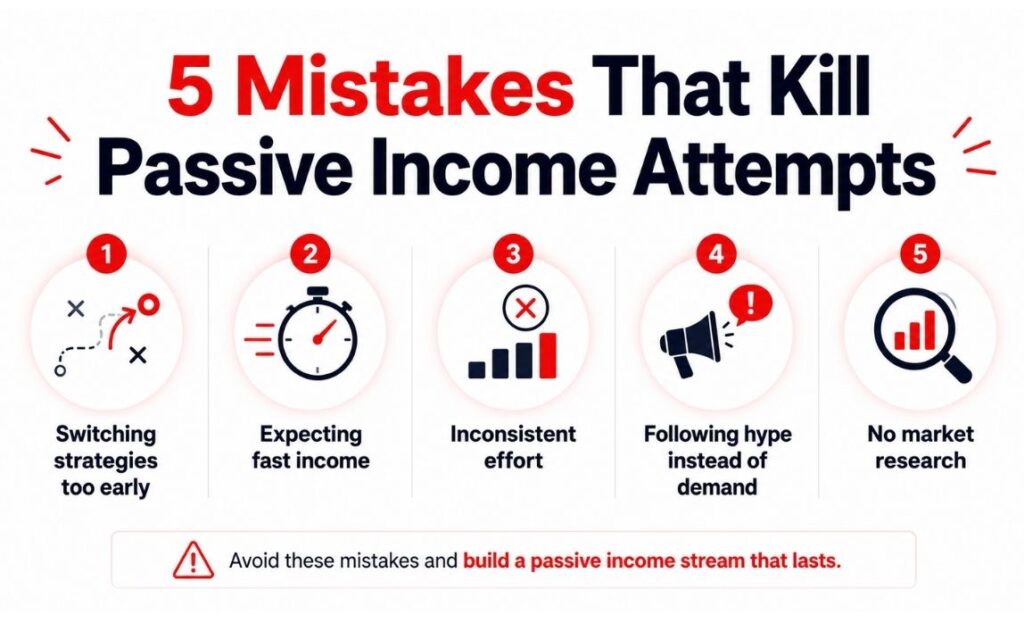 Most people don’t fail because passive income “doesn’t work.” They fail because they repeat a few predictable mistakes that slowly destroy momentum before results appear. 1. Switching strategies too earlyWhat happens: Why it kills results: Warning signs:
2. Expecting income during the setup phaseWhat happens: Why it kills results:
Warning signs:
3. Choosing based on hype instead of consistency fitWhat happens: Why it kills results: Even a “high potential” strategy fails if you abandon it early. Warning signs:
4. Treating everything like a quick experimentWhat happens: Why it kills results:
Without consistency, nothing accumulates. Warning signs:
5. Ignoring demand and trying to “create demand”What happens: Why it kills results: If no one is searching, buying, or clicking, nothing converts. Warning signs:
The pattern behind all failuresAll five mistakes come down to one root issue:
The correction that fixes everythingIf you want to avoid 90% of failure cases: Build consistency, not excitement Stick to one strategy long enough for it to compound Focus on demand, not ideas Expect delays before results Frequently Asked QuestionsWhat is passive income?Passive income is money earned from an asset or system that continues generating income after the initial work or investment has been completed. Can I make passive income with $100?Yes, but $100 alone will not generate significant income immediately. What is the easiest passive income to start?The easiest passive income to start is a high-yield savings account because it requires no skill, no risk, and almost no setup time. How long does passive income take to work?Most passive income strategies take between 6 to 18 months to produce meaningful income. Can students build passive income?High-yield savings accounts have the least financial risk because deposits are protected (in insured banking systems). Is affiliate marketing worth starting from scratch?Yes, but only if you are willing to commit long enough for trust and traffic to build. Can passive income replace a full-time income?Yes, but usually not quickly. What is the biggest passive income myth?The biggest myth is that passive income requires no work. What should I do first with $100?The best first step is to put your $100 into a high-yield savings account while deciding which long-term income strategy fits your skills. Final ThoughtsPassive income under $100 is real — but it is not fast or automatic. The systems in this guide work, but only under one condition: You give them enough time to compound. Most beginners fail for one reason: The winning approach is simple:
$100 is not the income engine — What you build from here depends on consistency, not capital. For more on the foundational principles behind building lasting income from small starting points, see our guide to building wealth from scratch and the Warren Buffett lesson beginners consistently overlook. Related Posts
|
Leave a Reply